SANITRAP Efficacy Tests. Enzymes That Break Down Fats and Oils.
Date
09 of September, 2026
Author
PROQUINSA
Reading time
5 min
Introduction:
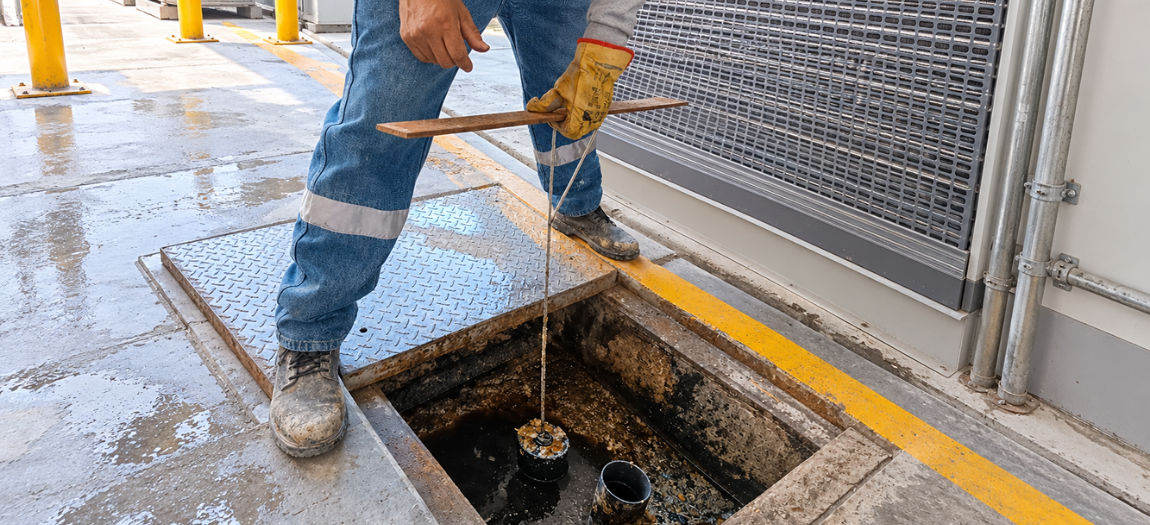
Pouring fats and oils down the drain can cause various problems; for this reason, it is necessary to mitigate the effects of fats and oils before they reach the sewer system.
Understanding the impact of FOG (fats, oils, and greases) and how to treat them from the source through industrial cleaning is essential to eliminating all the problems that cause clogs.
FOG are in liquid form when heated, but when they cool, they solidify, clogging drains, and harden over time, even preventing water from draining through the pipes.
To date, various liquids have been used to unclog drains; however, there is now a new alternative that avoids the use of these liquids—enzyme-based treatments that break down FOG.
Enzymatic treatments are a safe way to break down fats and the solid particles formed from FOG, protecting both the wastewater system and the environment. These enzymatic treatments do not affect or damage drains, pipes, or sewer systems.
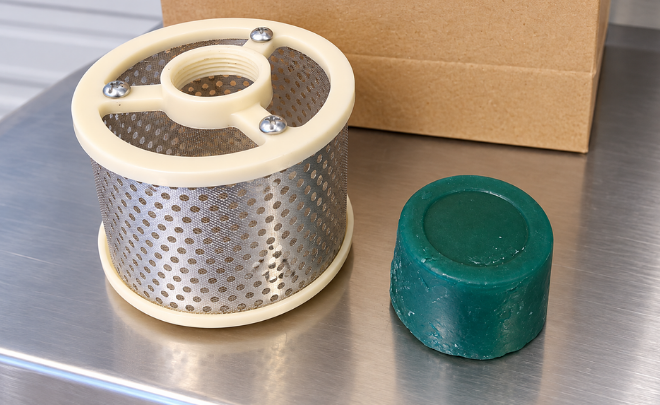
SANITRAP is a revolutionary time-release block that releases enzymes and bacteria without requiring applicators, plumbing modifications, or expensive dosing pumps. Simply place a tablet in the grease trap, and it starts working.
Current technology requires liquid bacteria-enzyme formulations that must be systematically dispensed into the grease trap at night to prevent interaction with harsh cleaning chemicals during operating hours.
The new SANITRAP blocks eliminate the need for difficult-to-handle liquids, avoid the need for plumbing modifications, and do away with daily additions that complicate proper sanitary maintenance of the grease trap.
You can add SANITRAP blocks periodically, based on your needs or conditions, to increase beneficial bacteria and enzymes and keep grease traps free of residue and odors. This results in fewer sewer problems and fewer FOG violations. These blocks are truly innovative.
Goals:
- Evaluate the effectiveness of the Sanitrap blocks installed in a market’s grease trap.
- Determine how often the Sanitrap blocks should be replaced, based on their condition and the market’s needs.
Features and benefits of SANITRAP blocks:
SANITRAP blocks contain 80 times the level of enzymes and bacteria found in liquid products and 8 times the level found in solid products.
Composition:
- Four trillion ufc/g from five strains of the genus Bacillus:
- Bacterial Protease 7,450 PC/gm
- Bacterial Amylase 685 BAU/gm
- Lipase 200 LU/gm
- Cellulase 3,000 CU/gm
It reduces costs while delivering improved results thanks to additional enzymes not found in most grease trap products. All ingredients are environmentally friendly.
Product Features:
- Effective pH Range – 5.0 – 9.5
- Temperature Range – 45–120°F / 5–50°C
- Compact size for convenient storage
Functions of the compounds:
PROTEASE: An enzyme that breaks down proteins into amino acids; it degrades compounds such as blood and eggs, among others.
AMYLASE: An enzyme that breaks down starches, such as residues from pasta or tubers.
LIPASES: Enzymes that break down fats such as butter or oil.
CELLULASES: Enzymes that break the β-1,4 glycosidic bonds in cellulose, such as those found in paper.
Methodology:
Trial location:
The trial was conducted at El Príncipe Market, located at 555 Avenida Principal, La Calera de La Merced neighborhood, Surquillo, Lima.
This market has approximately 50 stalls offering meat, fruits, vegetables, groceries, and general merchandise, as well as restaurants and juice bars.
The facility is equipped with a grease trap with a collection capacity of 2.0 m³.
Background:
Last July, the El Príncipe Market was fined by the Lima Water and Sewer Service (SEDAPAL) for discharging effluents with concentrations exceeding the parameters set forth in Annex 1 of Supreme Decree No. 010-2019 – HOUSING, Regulations on Maximum Permissible Values (VMA), for discharges of non-domestic wastewater into the sanitary sewer system. As shown in the following table:
| PARAMETER EXCEEDED | Unit of Measurement | Standard VMA | Result Value |
| BIOCHEMICAL OXYGEN DEMAND (BOD) | mg/L | 500 | 1094.2 |
| CHEMICAL OXYGEN DEMAND (COD) | mg/L | 1000 | 2038 |
| TOTAL SUSPENDED SOLIDS (TSS) | mg/L | 500 | 848 |
| OILS AND FATS (AYG) | mg/L | 100 | 270 |
Based on the results obtained, the property owners have decided to comply with the regulated VMA limits in order to have the penalty lifted and avoid incurring additional costs due to excess emissions into the sewer system.
Proposed treatment:
The plan is to use Sanitrap blocks as the sole treatment method; these were provided to the customer as samples.
Before installing the treatment, the grease trap must be cleaned and an initial sample taken, after which the product can be installed.
Staff members must set up a container suspended in the center of the grease trap, where the Sanitrap tablet will be placed.
Amount used: 2 ounces
The president of the Merchants’ Association is responsible for frequently monitoring the consumption of the supplied tablets, ensuring that the grease trap is consistently maintained with the product. Assessments will be conducted every 3 days.
Results:
Three sampling sessions were conducted during the treatment period, which lasted 37 days. These were carried out by SEGESA (Environmental Laboratory) and were distributed as follows:
- Day zero (0): July 31, 2025
- Day eighteen (18): August 18, 2025
- Day thirty-seven (37): September 6, 2025
Continuous monitoring determined that the 2-ounce supply was consumed over a period of 16 calendar days, at which point the next dose was immediately replenished. The next replenishment took place 37 calendar days after the treatment was initiated.
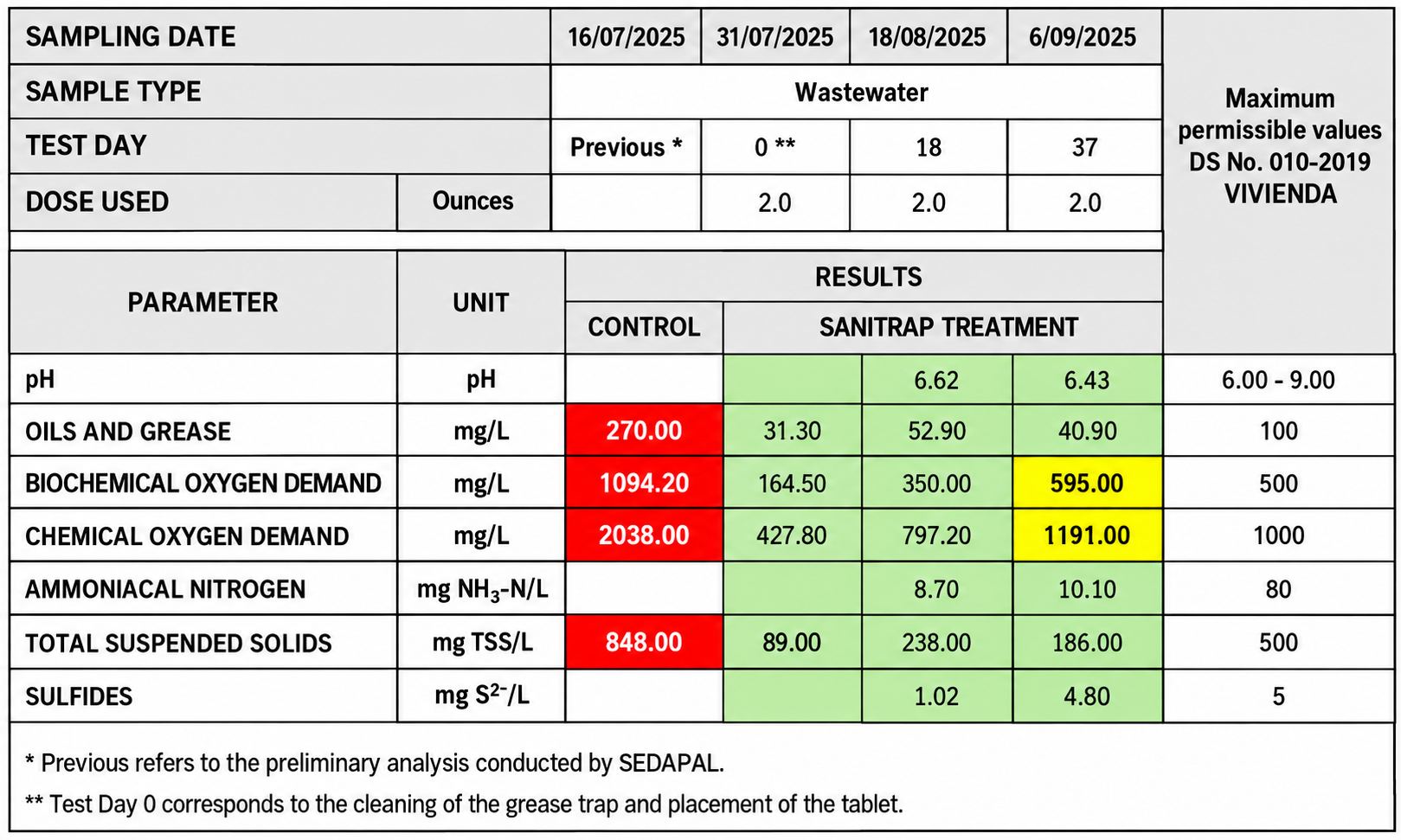
The data obtained following the scheduled monitoring sessions indicate the product’s effectiveness after 18 and 37 days for all parameters except BOD and COD, which are slightly above the limit but well below the Maximum Allowable Values (MAVs) for pH, oil and grease concentration, ammonia nitrogen, total suspended solids, and sulfides.
However, when comparing the results with the data obtained in the preliminary control, the parameters have decreased considerably, which could lead to the lifting of the penalty imposed by the regulatory agency.
The owners indicate that some pipes at the wholesale market are currently clogged, which could be causing the parameters to rise slightly above the permitted levels.
Conclusions:
- In the case of the El Príncipe market, Sanitrap tablets are replaced every 15 to 16 days, by which time the product is almost entirely consumed.
- The product’s effectiveness can be verified for all maximum permissible values set forth in Ministerial Decree No. 010-2019 on Housing, with a usage period of less than 18 days.
- The product’s effectiveness can be verified for the maximum permissible values established by DS No. 010-2019 on Housing regarding pH levels, oils and fats, ammoniacal nitrogen, total suspended solids, and sulfides, with a usage period of less than 37 days.
- For BOD and COD values, with a usage record of 37 days, the results are slightly above the permitted limits but well below the control analysis conducted prior to the installation of the test system—the very analysis that led to the establishment being FINED.
Recommendations:
- It is recommended to replace the tablets every 2 weeks (14 days) to ensure that the trap has a sufficient enzymatic load, since the effluent load is not known to be constant and may vary depending on the time of year.
- It is recommended to increase the dosage from 2 to at least 3 ounces with each replacement.
- Conduct periodic monitoring every 15 days, as the results for two parameters are slightly above the permitted levels.
- It is recommended to unclog and perform a general inspection of all effluent collection pipes leading to the grease trap in order to better control residue buildup.